Al Qaeda’s 22 Tips To Avoid Drone Detection

Al Qaeda Sticker
Al Qaeda Sticker

‘Local Timbuktu mat-seller Leitny Cisse al-Djoumat couldn’t hide his shock at the sheer amount of mats these strange fellows bought.

“It’s the first time someone has bought such a large amount,” al-Djoumat told the Associated Press. “They didn’t explain why they wanted so many.”

Well, AP reporters later figured it all out when they found a xeroxed copy of 22 tips to avoid drone detection.

We’ve put together the list, which serves as critical intel al-Qaeda in Mali.’ (Business Insider).

Maybe so

Aside

DVD-RAM Blue Mood

Speculative mood tonight. I just noticed that the previous three posts all have ‘may’ in their titles.

Dolphins May Call Each Other by Name

English: Dolphins at Loro Parque, in Tenerife ...

What might dolphins be saying with all those clicks and squeaks? Each other’s names, suggests a new study of the so-called signature whistles that dolphins use to identify themselves.

Whether the vocalizations should truly be considered names, and whether dolphins call to compatriots in a human-like manner, is contested among scientists, but the results reinforce the possibility.” (Wired Science).

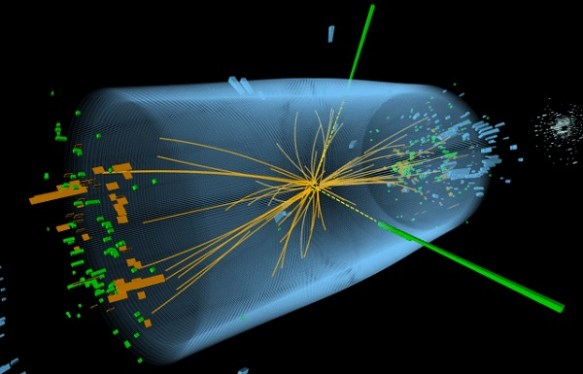
Higgs may spell doom

‘Is the Higgs boson a herald of the apocalypse? That’s the suggestion behind a theory, developed more than 30 years ago, that is back in the headlines this week. According to physicists, the mass of the Higgs-like particle announced last summer supports the notion that our universe is teetering on the edge of stability, like a pencil balanced on its point.

“It may be that the universe we live in is inherently unstable,” Joseph Lykken, of the Fermi National Accelerator Laboratory in Batavia, Illinois, said on Monday at a meeting of the American Association for the Advancement of Science. “At some point, billions of years from now, it’s all going to be wiped out.” ‘ (New Scientist).

People in a vegetative state may feel pain

“It is a nightmare situation. A person diagnosed as being in a vegetative state has an operation without anaesthetic because they cannot feel pain. Except, maybe they can.

Alexandra Markl at the Schön clinic in Bad Aibling, Germany, and colleagues studied people with unresponsive wakefulness syndrome (UWS) – also known as vegetative state – and identified activity in brain areas involved in the emotional aspects of pain. People with UWS can make reflex movements but can’t show subjective awareness.” (New Scientist).

Elderly Abandoned at World’s Largest Religious Festival

“Every 12 years, the northern Indian city of Allahabad plays host to a vast gathering of Hindu pilgrims called the Maha Kumbh Mela. This year, Allahabad is expected to host an estimated 80 million pilgrims between January and March.

People come to Allahabad to wash away their sins in the sacred River Ganges. For many it’s the realization of their life’s goal, and they emerge feeling joyful and rejuvenated. But there is also a darker side to the world’s largest religious gathering, as some take advantage of the swirling crowds to abandon elderly relatives.” (National Geographic).

Why speaking English can make you poor when you retire

Prof. Chen presented at the XMU CI workshop

Prof. Chen

‘It is a controversial theory which has been given some weight by new findings from a Yale University behavioural economist, Keith Chen.Prof Chen says his research proves that the grammar of the language we speak affects both our finances and our health.Bluntly, he says, if you speak English you are likely to save less for your old age, smoke more and get less exercise than if you speak a language like Mandarin, Yoruba or Malay.

Prof Chen divides the world’s languages into two groups, depending on how they treat the concept of time. “If your language separates the future and the present in its grammar, that seems to lead you to slightly disassociate the future from the present”. Strong future-time reference languages (“strong FTR”) require their speakers to use a different tense when speaking of the future. Weak future-time reference (“weak FTR”) languages do not.

“If I wanted to explain to an English-speaking colleague why I can’t attend a meeting later today, I could not say ‘I go to a seminar’, English grammar would oblige me to say ‘I will go, am going, or have to go to a seminar’. “If, on the other hand, I were speaking Mandarin, it would be quite natural for me to omit any marker of future time and say ‘I go listen seminar’ since the context leaves little room for misunderstanding,” says Prof Chen. Even within European languages there are clear grammatical differences in the way they treat future events, he says.”In English you have to say ‘it will rain tomorrow’ while in German you can say ‘morgen regnet es’ – it rains tomorrow.”

Speakers of languages which only use the present tense when dealing with the future are likely to save more money than those who speak languages which require the use a future tense, he argues… “The act of savings is fundamentally about understanding that your future self – the person you’re saving for – is in some sense equivalent to your present self,” Prof Chen told the BBC’s Business Daily.’ (BBC News).