Search for Yeti


Yeti

The Foreign Service memo advising yeti hunters: “This Foreign Service memo treats a science-fictional subject—the existence of the Yeti, or the Abominable Snowman—with utmost bureaucratic seriousness. Titled “Regulations Governing Mountain Climbing Expeditions in Nepal—Relating to Yeti,” it was issued from the American Embassy in Kathmandu on November 30, 1959.

The memo came at the end of a decade of strenuous Yeti-hunting. This Outside Magazine timeline of Yeti hunts tells the story in compact form. In 1953, Sir Edmund Hillary and Tenzing Norgay climbed Everest, and reported seeing large tracks. In 1954, the Daily Mail (UK) funded a sixteen-week “Snowman Expedition” to Everest to look for clues. (The newspaper is still on the case today.) And in the late 1950s, American oil millionaire and cryptozoology enthusiast Tom Slick—whose colorful life, as Badass Digest points out, should definitely be made into a movie—bankrolled a number of Himalayan expeditions in search of the creature.” (Slate) .

Man sues parents for not loving him enough

“A 32-year-old Brooklyn man is suing his parents, claiming he wasn’t loved enough by them and that their neglect has caused him to be homeless and jobless.

Bernard Bey filed a self-written lawsuit in Brooklyn court earlier this month, accusing his parents of causing him mental anguish and for making him feel “unloved and beaten by the world.” (U.S. News).

Al Qaeda’s 22 Tips To Avoid Drone Detection

Al Qaeda Sticker
Al Qaeda Sticker

‘Local Timbuktu mat-seller Leitny Cisse al-Djoumat couldn’t hide his shock at the sheer amount of mats these strange fellows bought.

“It’s the first time someone has bought such a large amount,” al-Djoumat told the Associated Press. “They didn’t explain why they wanted so many.”

Well, AP reporters later figured it all out when they found a xeroxed copy of 22 tips to avoid drone detection.

We’ve put together the list, which serves as critical intel al-Qaeda in Mali.’ (Business Insider).

Maybe so

Aside

DVD-RAM Blue Mood

Speculative mood tonight. I just noticed that the previous three posts all have ‘may’ in their titles.

Dolphins May Call Each Other by Name

English: Dolphins at Loro Parque, in Tenerife ...

What might dolphins be saying with all those clicks and squeaks? Each other’s names, suggests a new study of the so-called signature whistles that dolphins use to identify themselves.

Whether the vocalizations should truly be considered names, and whether dolphins call to compatriots in a human-like manner, is contested among scientists, but the results reinforce the possibility.” (Wired Science).

Higgs may spell doom

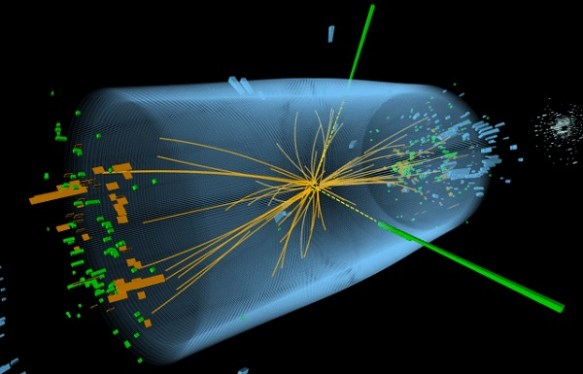
‘Is the Higgs boson a herald of the apocalypse? That’s the suggestion behind a theory, developed more than 30 years ago, that is back in the headlines this week. According to physicists, the mass of the Higgs-like particle announced last summer supports the notion that our universe is teetering on the edge of stability, like a pencil balanced on its point.

“It may be that the universe we live in is inherently unstable,” Joseph Lykken, of the Fermi National Accelerator Laboratory in Batavia, Illinois, said on Monday at a meeting of the American Association for the Advancement of Science. “At some point, billions of years from now, it’s all going to be wiped out.” ‘ (New Scientist).

People in a vegetative state may feel pain

“It is a nightmare situation. A person diagnosed as being in a vegetative state has an operation without anaesthetic because they cannot feel pain. Except, maybe they can.

Alexandra Markl at the Schön clinic in Bad Aibling, Germany, and colleagues studied people with unresponsive wakefulness syndrome (UWS) – also known as vegetative state – and identified activity in brain areas involved in the emotional aspects of pain. People with UWS can make reflex movements but can’t show subjective awareness.” (New Scientist).

Elderly Abandoned at World’s Largest Religious Festival

“Every 12 years, the northern Indian city of Allahabad plays host to a vast gathering of Hindu pilgrims called the Maha Kumbh Mela. This year, Allahabad is expected to host an estimated 80 million pilgrims between January and March.

People come to Allahabad to wash away their sins in the sacred River Ganges. For many it’s the realization of their life’s goal, and they emerge feeling joyful and rejuvenated. But there is also a darker side to the world’s largest religious gathering, as some take advantage of the swirling crowds to abandon elderly relatives.” (National Geographic).

Why speaking English can make you poor when you retire

Prof. Chen presented at the XMU CI workshop

Prof. Chen

‘It is a controversial theory which has been given some weight by new findings from a Yale University behavioural economist, Keith Chen.Prof Chen says his research proves that the grammar of the language we speak affects both our finances and our health.Bluntly, he says, if you speak English you are likely to save less for your old age, smoke more and get less exercise than if you speak a language like Mandarin, Yoruba or Malay.

Prof Chen divides the world’s languages into two groups, depending on how they treat the concept of time. “If your language separates the future and the present in its grammar, that seems to lead you to slightly disassociate the future from the present”. Strong future-time reference languages (“strong FTR”) require their speakers to use a different tense when speaking of the future. Weak future-time reference (“weak FTR”) languages do not.

“If I wanted to explain to an English-speaking colleague why I can’t attend a meeting later today, I could not say ‘I go to a seminar’, English grammar would oblige me to say ‘I will go, am going, or have to go to a seminar’. “If, on the other hand, I were speaking Mandarin, it would be quite natural for me to omit any marker of future time and say ‘I go listen seminar’ since the context leaves little room for misunderstanding,” says Prof Chen. Even within European languages there are clear grammatical differences in the way they treat future events, he says.”In English you have to say ‘it will rain tomorrow’ while in German you can say ‘morgen regnet es’ – it rains tomorrow.”

Speakers of languages which only use the present tense when dealing with the future are likely to save more money than those who speak languages which require the use a future tense, he argues… “The act of savings is fundamentally about understanding that your future self – the person you’re saving for – is in some sense equivalent to your present self,” Prof Chen told the BBC’s Business Daily.’ (BBC News).

Every recorded meteorite strike on Earth since 2,300 BCE mapped

“The meteorite that struck central Russia last week, which injured around 1,000 people as it broke apart over a section of the Ural Mountains and sent shockwaves across the ground below, was but one of thousands that have impacted our planet over the past four millennia. Now you can see the location of every recorded meteorite impact on Earth going back to 2,300 BCE all in one heat map created by Javier de la Torre, cofounder of geo software companies Vizzuality and CartoDB.

De la Torre created the map using CartoDB’s mapping software, which relies on the free crowdsourced OpenStreetMap for its base layer. The meteorite impact site data — 34,513 individual points of impact in total — came from the Meteoritical Society, an international nonprofit scientific collaboration…” (The Verge).

Do get mad

ANGER!!

The upside of anger: ‘ “Anybody can become angry, that is easy; but to be angry with the right person, and to the right degree, and at the right time, and for the right purpose, and in the right way, that is not within everybody’s power, that is not easy.”

So wrote Aristotle, more than 2000 years ago, in his classic work The Art of Rhetoric. His words don’t quite square with our modern concept of anger. Today, we tend to think of it as a destructive emotion that can wreck relationships and blight careers. Indeed, the field of anger management is awash with theories on how best to control or suppress excess anger. But anger, it now seems, is not all bad. In fact, we might do well to cultivate our anger in some situations – in personal relationships, in negotiating certain business deals and within social action groups, for example.

“To the extent that anger is usually unpleasant to experience, it could be viewed as a negative emotion,” says psychologist Brett Ford at the University of California, Berkeley. “But experiencing anger can help us pursue our goals, and be happier and healthier in the long run.” To reap these benefits, the knack, as Aristotle understood, is to know when, where, why and how to get angry. We need to learn to use our anger strategically, rather than letting it control us.’ (New Scientist).

Why So Many Great Russian Meteor Videos?

dashboard Citroën BX

“The meteor streaking across Russia this morning was largely captured by cameras mounted on car dashboards. Why do so many Russian drivers seem to have dash-cams? Protection against fraud & hit-and-runs. Kottke featured this article from Animal New York’s Marina Galperina back in December….The other reason for the dash-cams? Russians are apparently crazy drivers. From the other previous Kottke Russian driving post: 13 minutes of can’t-look-away traffic accidents. ” (kottke).

Tunguska’s Little Sister?


Meteor strike injures hundreds in central Russia: “A meteor crashing in Russia’s Ural mountains has injured at least 500 people, as the shockwave blew out windows and rocked buildings. Most of those hurt suffered minor cuts and bruises but some received head injuries, Russian officials report. A fireball was seen streaking through the clear morning sky above the city of Yekaterinburg, followed by loud bangs.” (BBC News).

[“Tunguska”? See here.]

Fifty US states with equal population

“As part of a thought experiment to reform the electoral college, Neil Freeman redrew the US into 50 new states with equal population. In trying to balance the interests of the popular vote vs the integrity of states, he’s split the baby so that no one is likely to be happy. Perfect!

The map began with an algorithm that groups counties based on proximity, urban area, and commuting patterns. The algorithm was seeded with the fifty largest cities. After that, manual changes took into account compact shapes, equal populations, metro areas divided by state lines, and drainage basins. In certain areas, divisions are based on census tract lines.” (kottke).

Synthetic highs are mutating

A new study on the chemicals in the latest batch of legally sold ‘synthetic highs’ has found what looks like an unintended hybrid drug.

As regular Mind Hacks readers will know, I’m a keen watcher of the murky ‘legal high’ market.

We seem to be in the unprecedented position where sophisticated grey-market pharmacologists are rapidly inventing completely new-to-science drugs in underground labs for thrill-seeking punters.

These synthetic drugs have typically come in two types: ‘fake pot’ – made from synthetic cannabinoids and stimulants, usually derived from cathinone.

A study just published in Forensic Science International looked at the chemicals in a new wave of ‘fake pot’ herbal highs sold over the internet.” (Mind Hacks).

The artist formerly known as Dubya


“Maybe it shouldn’t surprise us that the man who brought us a vision of compassionate conservatism would turn to art to express the angst of a crappy presidency that got us into two wars; used homophobia, racism, and sexism as an electoral tool; crashed our economy; and made the world hate America. This is a man who is obviously feeling his mortality. He sits in the bathtub alone. Nothing to contemplate. Nothing to see beyond reflections of himself and his body. There is almost a melancholy in these images, with their grays, and he is not presented as a strong, heroic person — in fact, quite the opposite. This is not the George W. Bush of Fox News or Sunday morning talk shows. This is Bush the old man, with lots of time on his hands. Once the most powerful man in the world, Bush is now alone, exploring his immediate surroundings in these spurts of introspection. If only he had done this all along, maybe he would’ve been a better leader.” (Salon)

Non-Expert

‘Question: Why, when you’re waiting for a lift having already pressed the “call lift” button, does someone always arrive after you and insist on re-pressing the button?… (T)o truly understand the root of Bob’s action, we would do well to consider other futile activities in his life…’ The Morning News).

Tsunami strikes Solomon Islands

English: Date/Time: 2011-04-23, 04:16:55 UTC M...

“• A massive earthquake struck Wednesday east of Kira Kira that has generated a localized Tsunami.

• Five people have been confirmed dead and coastal villages have been damaged.

• In the previous week, the region has seen about 7 earthquakes of magnitude 6 to 6.5 until Wednesday.” (Xinhua)

Tsunami Debris On Alaska’s Shores Like ‘Standing In Landfill’

“Refrigerators, foam buoys and even ketchup bottles are piling up on Alaska’s beaches. Almost two years after the devastating Japanese tsunami, its debris and rubbish are fouling the coastlines of many states — especially in Alaska.”(NPR).

Amateur effort finds new largest prime number

Just a small portion of the new largest prime number

“The Great Internet Mersenne Prime Search (GIMPS) project has scored its 14th consecutive victory, discovering the largest prime number so far.

The number, 2 to the power of 57,885,161 minus 1, is a digit that’s 17,425,170 digits long. That’s big enough that if you want to see the full text, you’ll have to brace yourself for a 22.5MB download.

GIMPS, a cooperative project splitting the search across thousands of independent computers, announced the find yesterday after it had been confirmed by other checks. At present, there are 98,980 people and 574 teams involved in the GIMPS project; their 730,562 processors perform about 129 trillion calculations per second.” (CNET).

Attention Disorder or Not, Children Prescribed Pills to Help in School

English: 20mg extended release capsule of Adderall

‘When Dr. Michael Anderson hears about his low-income patients struggling in elementary school, he usually gives them a taste of some powerful medicine: Adderall.

The pills boost focus and impulse control in children with attention deficit hyperactivity disorder. Although A.D.H.D is the diagnosis Dr. Anderson makes, he calls the disorder “made up” and “an excuse” to prescribe the pills to treat what he considers the children’s true ill — poor academic performance in inadequate schools.

“I don’t have a whole lot of choice,” said Dr. Anderson, a pediatrician for many poor families in Cherokee County, north of Atlanta. “We’ve decided as a society that it’s too expensive to modify the kid’s environment. So we have to modify the kid.” ‘ (NYTimes.com).

Drowned in a Stream of Prescriptions

English: Adderall

“The story of Richard Fee, an athletic, personable college class president and aspiring medical student, highlights widespread failings in the system through which five million Americans take medication for A.D.H.D., doctors and other experts said.

Medications like Adderall can markedly improve the lives of children and others with the disorder. But the tunnel-like focus the medicines provide has led growing numbers of teenagers and young adults to fake symptoms to obtain steady prescriptions for highly addictive medications that carry serious psychological dangers. These efforts are facilitated by a segment of doctors who skip established diagnostic procedures, renew prescriptions reflexively and spend too little time with patients to accurately monitor side effects.” (NYTimes.com).