
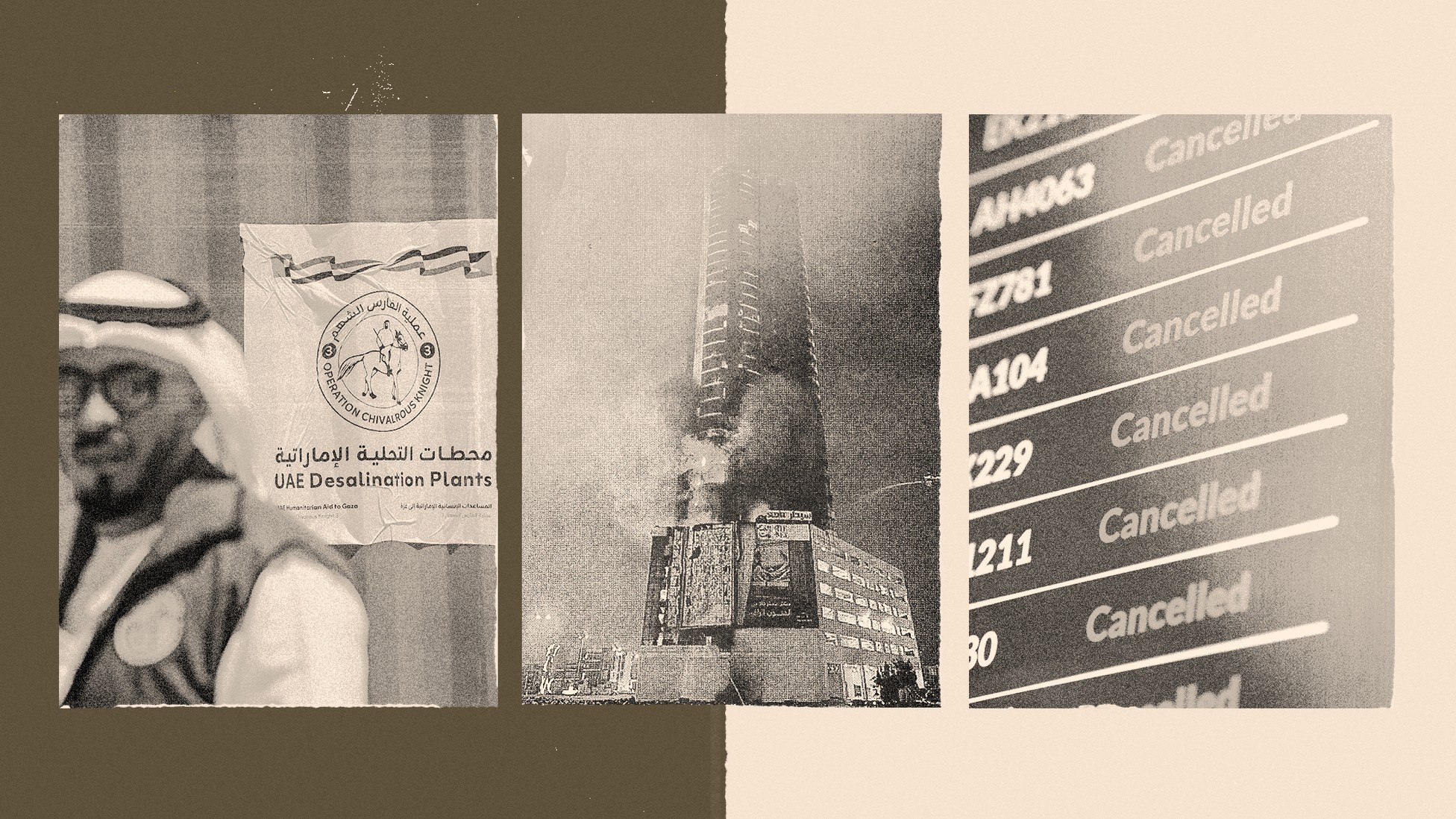
‘…(E)ven the optimists acknowledge that the longer the war goes on, the more the Gulf region’s extraordinary vulnerabilities will be exposed. The risks to the UAE, Saudi Arabia, Qatar, Bahrain, and Kuwait go beyond interrupted oil and gas sales: In an arid region with few other resources, everyone is dependent on a daily influx of food and desalinated water along supply routes and pipelines that could be struck from the air. The Gulf has transformed in the past half century from a sparsely populated desert into a postmodern hub of migration and commerce with some 60 million residents. All of that prosperity rested on the slender premise that Iran would never do what it is doing now.
“If this goes on for another week or two, okay, tourists and investors will come back; the losses can be made up,” one Emirati, who requested anonymity because he did not want to appear skeptical of the government’s hopeful messaging, told me. “But if it goes on longer than that, God knows what happens.”
The number of missiles being fired at the Gulf countries has dropped substantially in recent days, thanks to American and Israeli efforts to destroy Iranian launchers. But even a trickle of drone strikes, if they continue for months, could damage the Gulf’s brand as a haven within a volatile region.
Dubai, the UAE’s largest city, may be especially exposed to that kind of reputational risk, because its economy is so dependent on tourism, real estate, and foreign investment. But the entire Gulf region has become a hostage of the ongoing war. Qatar has fewer air defenses than its larger neighbors, and its energy minister, Saad al-Kaabi, made the startling claim today that all Gulf oil and gas producers could be forced to stop production within days. The war, he told the Financial Times, could “bring down the economies of the world.”…’ (Robert F. Worth via The Atlantic)

