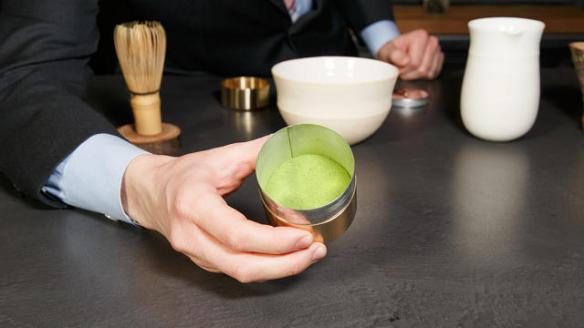
Via Fast Company: ‘To understand third-wave tea, it’s helpful to understand third wave coffee, which you could characterize as an obsession with tiny, granular details. First wave coffee meant Folgers. At a second-wave establishment like Starbucks, a patron might request non-coffee additives like soy milk, two pumps of sugar-free vanilla, and their name spelled correctly. Third-wave coffee drinkers are more concerned with process, and the coffee beans themselves: What’s the best extraction method? A pour-over? A vacuum pump? What’s the ideal water temperature? Oh! And if you aren’t using a conical Burr grinder, what are you even doing with your life?
If first-wave tea was Lipton coming to the U.S. at the turn of the 20th century, and the second wave was the spread of mall emporiums like Teavana, third-wave tea in the U.S. is, like its coffee predecessor, a return to form, with an emphasis on purity and accessibility. It’s simply tea, unadulterated and directly sourced from farmers, usually from Asia.’